All work

Case study · 03

NotesApp

A bilingual notes app that keeps notes on the phone or syncs them with an account.

Personal project, running on my phone. Online mode is experimental.

NotesApp editorNotesApp note listNotesApp in English
2
Languages, Arabic first
2
Storage modes, one screen
9
Note colours
5
Ways to sort
27
Automated tests

What it does

NotesApp is a Flutter notes app built Arabic-first. It started in July 2025 as a client for my Laravel notes API and grew into an app with two modes: notes kept on the phone in a Hive database, or an account that syncs with the API.

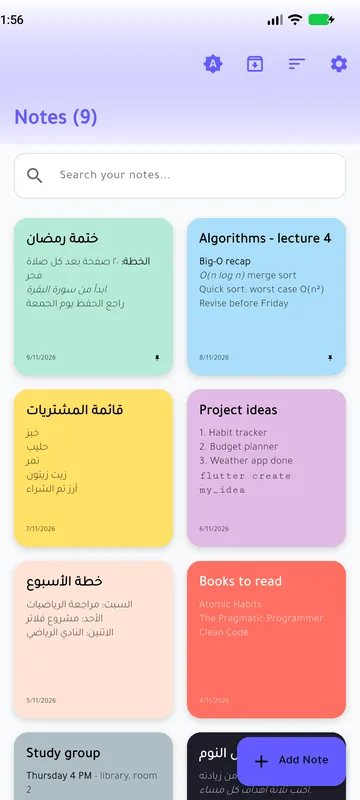
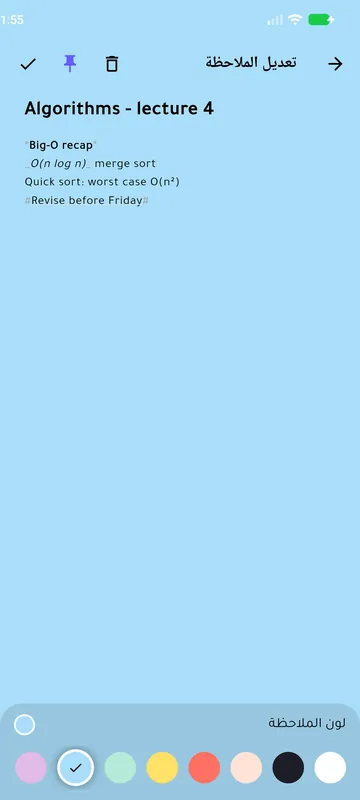
  • Writing: bold, italic, underline, strikethrough and monospace with WhatsApp-style marks, shown live in the editor and on every card.
  • Organising: nine colours (the text flips to black or white to stay readable), pinning, archiving, search as you type, and five sort orders.
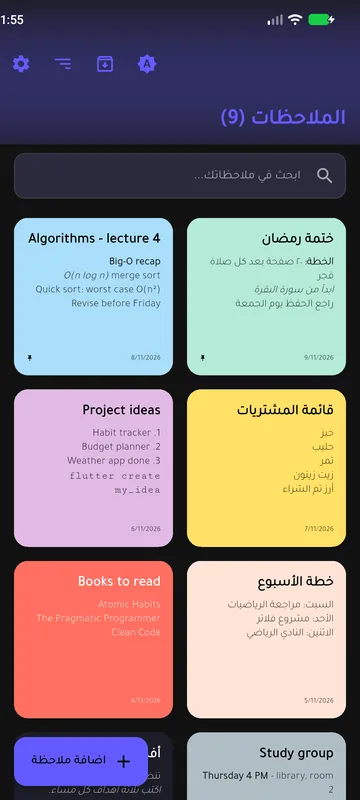
  • Languages: Arabic and English, switchable at any time. Each note picks its own text direction from what you type, so mixed notes line up correctly.
  • Feel: light, dark or system theme, an animated calligraphy splash, and a warning before you leave unsaved changes.
The animated splash
First launch: keep notes on the phone, or sign in
Notes with colours and formatting
The editor, with formatting shown live
Five ways to sort
Search as you type
The same app in English
Settings: language and theme

How it’s built

GetX handles state, navigation and dependency injection. The note screens depend on one controller interface with two implementations, one for the local Hive database and one for the REST API, and the app picks one at start-up.

  • Offline mode: Hive stores each note, and its key becomes the note’s ID, so one model serves both the database and the API.
  • Online mode: a Laravel REST API with token sign-in; the token is kept in secure storage.
  • Formatting: saved as light markup inside the note text, so neither the database nor the API needed a new field.
  • Flutter
  • Dart
  • GetX
  • Hive
  • Laravel
  • REST API
  • Lottie
  • Arabic RTL

Engineering stories

One screen, two storage back-ends

The app began as an API-only client, and an offline mode shouldn’t mean building every screen twice. The screens talk to an interface; a Hive version and an API version implement it, and the binding picks one when the app starts.

Arabic first, with each note facing the right way

Arabic runs right to left, English left to right, and one note can hold both. The whole interface flips with the language, and each title and body field sets its own direction from its content, so an Arabic note stays right-aligned even in the English interface.

A fake API and tests that found six bugs

Online mode had never been tested without the real server. I built an in-process fake of the API and wrote 27 tests; they found error responses that crashed the decoder, lists that disagreed after pinning or deleting, a doubled # in colours, and failures that showed nothing. All are fixed.
Where it stands

A personal project that runs on my phone; it isn’t published. Offline mode is the main way to use it. Online mode worked against my Laravel API locally and is marked experimental in the app; the API’s code stays private.

Next projectSharara

↑↓ move · Enter open · Esc close